
 Your Truck Is Heavier Than You Think: Payload After the Deck, Crane and Moffett">
I've had some version of this conversation more times than I can count. A dealer buys a flatbed rated at 19,500 lbs and figures he has close to 10,000 lbs of payload to work with. Then someone puts it on a scale with the deck, the toolboxes and a full tank of fuel, and the real payload comes in well short of that.
By then the truck has usually been running full lumber packages for months. The number on the brochure and the number you can legally carry are two different numbers, and the gap between them gets wider with every piece of equipment you bolt on.
GVWR is the ceiling, not the payload
Gross vehicle weight rating is the most the loaded truck can weigh. Everything counts against it: the chassis, the fuel, the driver, the deck, the crane or forklift mount, the straps, the chains, the dunnage, and finally the load.
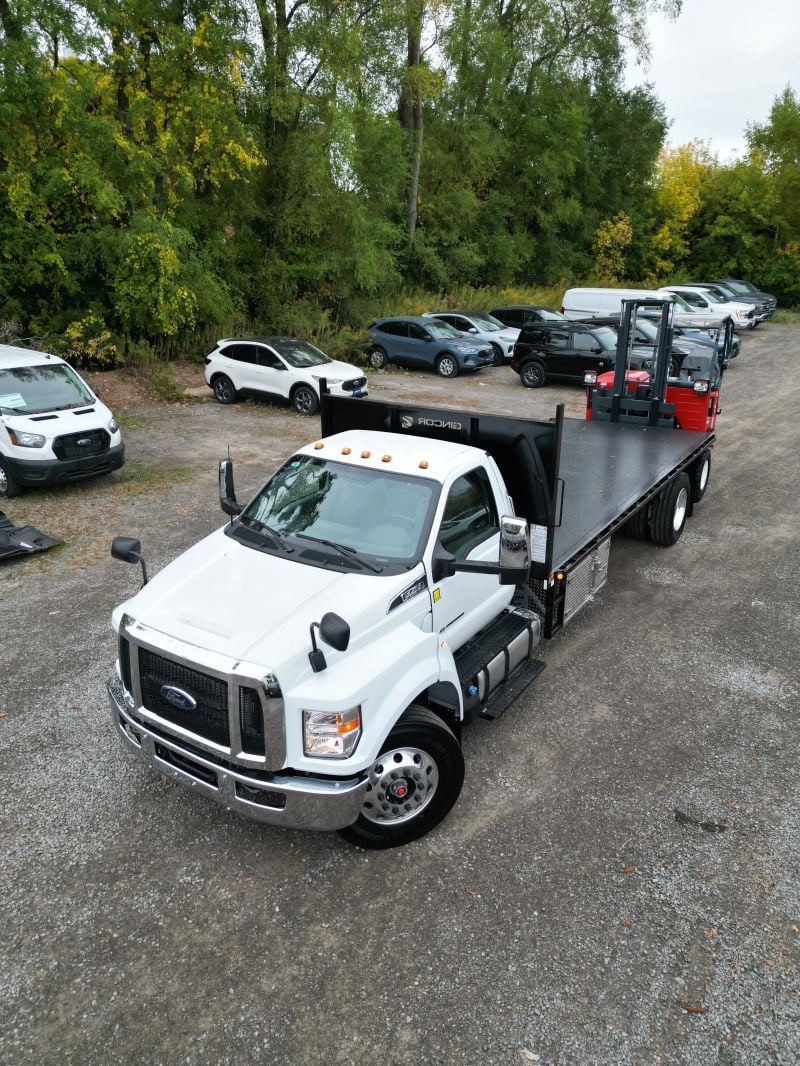
The bare chassis weight in the spec sheet is the starting point. By the time an upfitter adds a 16-foot deck, headache rack and toolboxes, you've given up a big piece of that rating. Add a knuckle boom or a truck-mounted forklift and you give up a lot more.
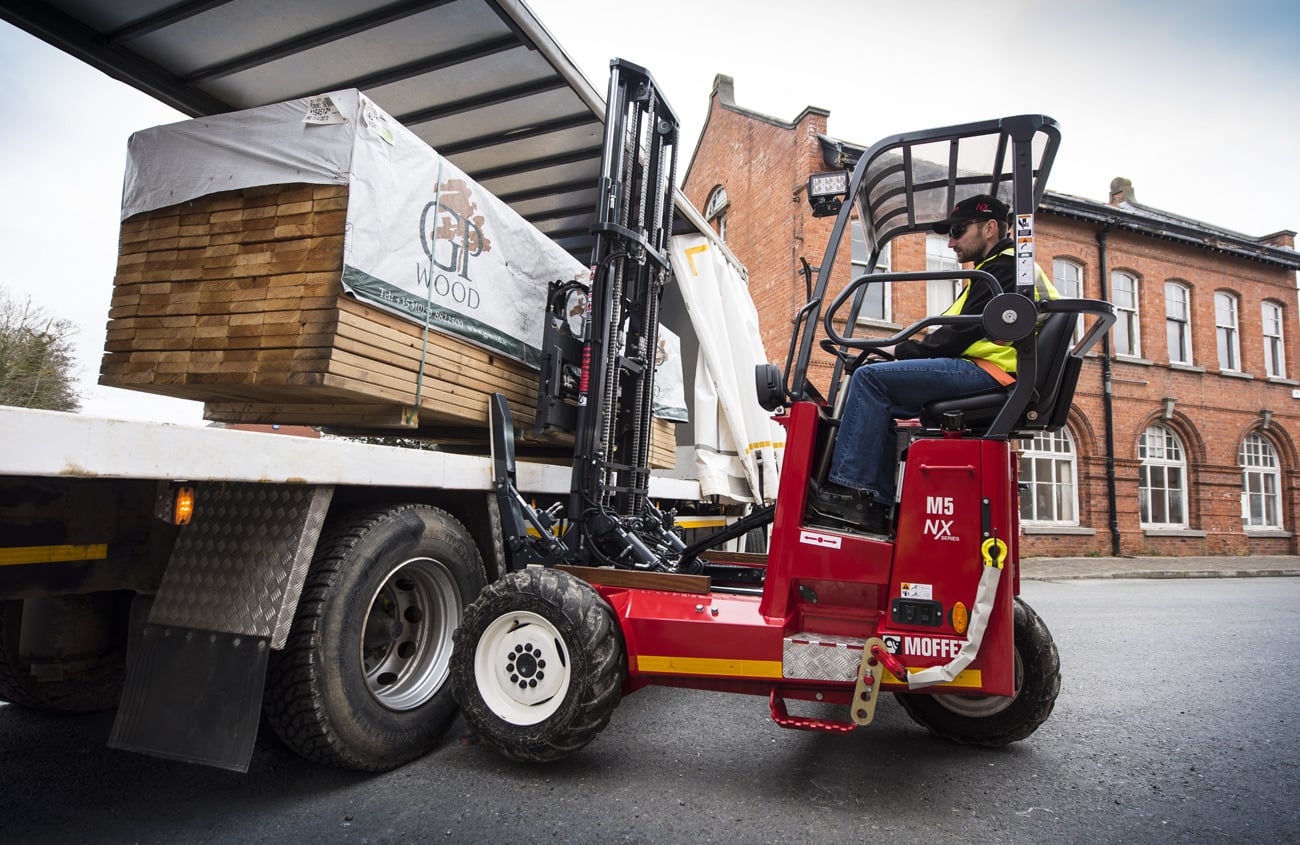
A truck-mounted forklift is the one that surprises people. It adds several thousand pounds, and it hangs off the very back of the truck. That changes how the weight sits on each axle. You can be under your GVWR and still over your rear axle rating, and an inspector will write you up for either one.
What overloading costs you
Fines and out-of-service orders are the obvious cost. The quieter cost shows up in the shop. Brakes, springs, tires and wheel bearings all wear faster on a truck that runs heavy every day. I've seen trucks need brake jobs twice as often as they should because they were spec'd for the brochure load instead of the real one.
There's an insurance angle too. If a truck is involved in a collision and the investigation finds it was over its rating, you don't want to be the one explaining that to an adjuster.
And there's the driver. An overloaded truck stops longer, handles worse and wears out the person behind the wheel. Your best driver notices before anyone else does.
Spec from the load backwards
The right way to spec a delivery truck starts with the heaviest load you send out on a regular day. A full package for a typical house in your market. A pallet count of shingles. A unit of drywall. Write that number down first.
Then add the equipment you need to deliver it: the deck, the crane or the forklift, the gear your drivers carry. Add a reasonable margin, because loads tend to grow. That total tells you what GVWR you need, and what axle ratings you need underneath it.
Sometimes the answer is a heavier chassis than you planned. Sometimes it's a lighter deck, and an aluminum deck can buy you back a meaningful chunk of payload. Sometimes it's two trucks doing different jobs instead of one truck trying to do both.
Put your current trucks on a scale
If you don't know what your trucks weigh empty, find out this month. Most building centres are a short drive from a certified scale. Weigh each truck the way it leaves your yard in the morning, with fuel, equipment and driver, and write the number on the door jamb if you have to.
Then compare it to your typical load. If the math comes out tight, you've learned something that will shape your next purchase. If it comes out over, you've learned something you need to fix now.
When we spec a truck, the scale weight and the load list come before the brand. If you want help running those numbers on a truck you're thinking about, send me the spec sheet and your typical load and I'll walk through it with you.