
 Why A Multi-Store Home Hardware Owner Put Tractor-Trailers Into His Fleet">
Most of my conversations with building centre owners are about delivery trucks. Flatbeds, Moffetts, crane trucks, the trucks that take product from the yard to the job site.
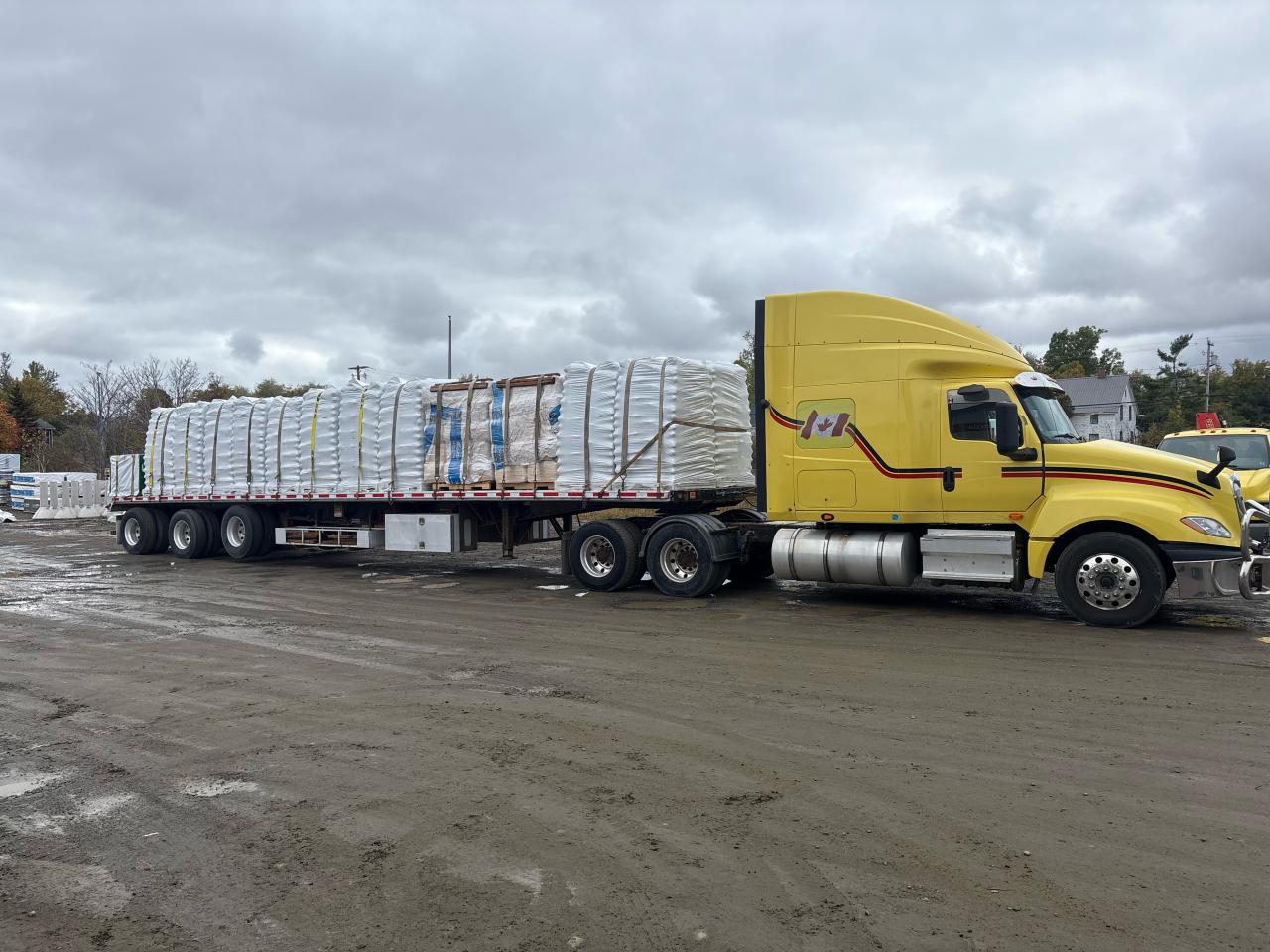
Lately a different conversation keeps coming up. Multi-store dealers are asking about tractor-trailers, the trucks that move product to their stores instead of away from them. This month we put together a tractor-trailer package for Geerlinks Home Hardware in Southwestern Ontario, and it got me curious about how other dealers approach it.
So I asked Rob Lawrie from the Lawrie Group, owners of 8 Home Hardware Stores across Southwestern Nova Scotia. Rob has been running his own tractor-trailers for a while, and his answer was one of the clearest I've heard on the subject.
More than transportation
Rob put it this way: "For us, adding tractor-trailers to our fleet was about more than just transportation. It was about improving efficiencies, gaining greater control over our supply chain, and positioning ourselves to grow our business."
That's the part most dealers miss. When they look at a tractor-trailer, they look at what it costs to run. Rob looks at what it costs to get product from the supplier or distribution point onto his shelves. Those are two different numbers, and the second one is the one that matters.
Where the money shows up
The first place is freight. A tractor-trailer lets you consolidate loads and move more product per trip. Instead of paying an outside carrier for a string of smaller shipments, you bring in one full load.
The second is purchasing. Rob pointed out that having the capacity to handle full truckloads opens up direct buys and better freight terms with suppliers. In his words, "Sometimes the savings on purchasing and freight can be just as important as the transportation efficiency itself."
The third is inventory. With eight stores, Rob can move stock where it's needed instead of carrying the same inventory at every location. That means fewer duplicate stocks, better availability, and faster response when a contractor needs something one store doesn't have.
The fourth is customer service. Contractors buy from the yard that has the product. When peak season hits and outside carriers get stretched, having your own trucks keeps your shelves stocked while a competitor waits on a delivery window.
What Rob measures
Rob doesn't judge his trucks on gut feel. He tracks freight cost as a percentage of sales, cost per kilometre and cost per load, and how full the trucks run. He watches inventory turns and stock availability, the savings from direct purchasing and consolidated loads, on-time delivery, and the overall contribution to sales and gross margin.
That list is worth copying. Most dealers who tell me a truck "doesn't pay" are only measuring the first two.
The hard parts
Rob didn't pretend it's all upside. Equipment costs, maintenance, insurance and drivers all go into the math. Keeping the trucks busy enough is the big one. A tractor-trailer that sits half the week is an expensive way to save on freight.
Drivers deserve their own mention. A tractor-trailer needs a Class 1 or AZ driver, and those are harder to find than a Class 5 driver for a flatbed (our licence rules post covers each province). A dealer considering this needs a plan for who's going to drive before signing for a truck.
Who this fits
This isn't for every Home Hardware dealer. A single store with one lumber yard probably doesn't have the volume to keep a tractor-trailer busy. Where it starts to make sense is when you have several locations, you move a lot of building materials, and you're paying real money to outside carriers today.
Rob's closing line stuck with me: "I think there's a good story here about how independent dealers can use transportation as a strategic advantage rather than simply viewing it as an operating expense."
I agree. If you run more than one store and you've wondered whether your own tractor-trailer would pay, start by pulling your freight costs as a percentage of sales. Then give me a call. We've built these packages for dealers in Ontario and Atlantic Canada, and I'm happy to work through the numbers with you.