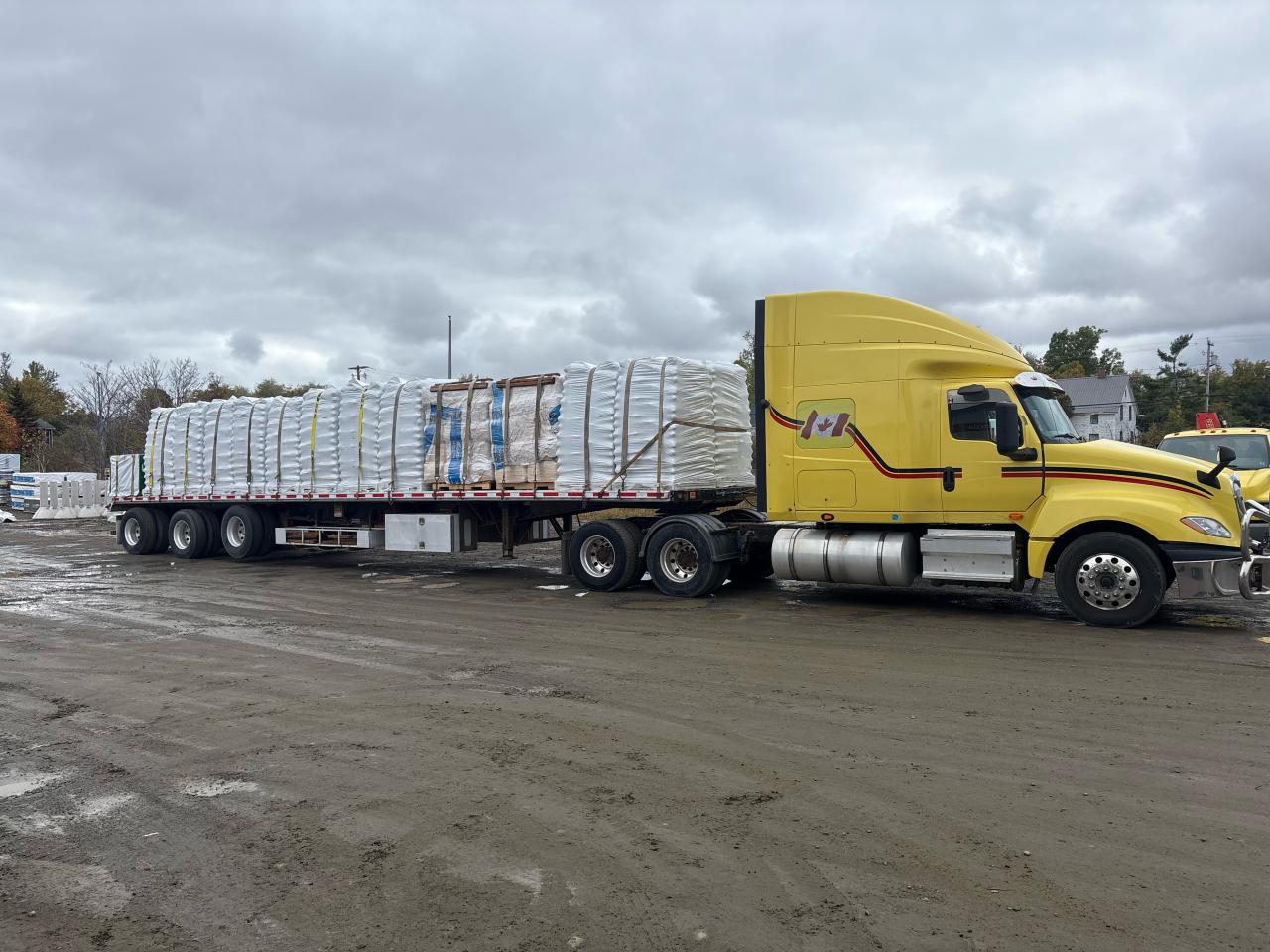


Diesel crossed $2.65 a litre on average across Canada this fall, up close to 20% in three months. If you run four or five delivery trucks, you've seen it on every fuel bill since summer.
You can't do much about the price at the pump. You can do a lot about how many litres your trucks burn doing the same work, and in my experience most building centre fleets waste more than they think.
Idling
Natural Resources Canada puts an idling truck engine at about 3 litres an hour. At today's prices that's around $8 an hour per truck for going nowhere.
Building centre trucks idle more than most. The driver leaves it running while the crew unloads, while he waits at the yard for the next load, while he grabs a coffee on a cold morning. An hour a day across five trucks and 250 working days adds up to roughly 3,750 litres a year, close to $10,000 at current prices.
Most of that is habit. A clear policy, block heaters plugged in overnight so trucks don't need a long warm-up, and a cab heater that works without the engine can cut it in half.
Tires
NRCan's numbers say a truck running 10 psi low uses up to 4% more fuel and wears its tires faster. On a loaded flatbed doing short runs all day, tire pressure drifts and it rarely gets checked.
A weekly pressure check takes five minutes per truck. It's the cheapest fuel savings you'll find.
Speed and routing
Every 10 km/h over 90 burns roughly 10% more fuel. Most of your trucks don't spend long on the highway, but the ones running to rural job sites do.
Routing matters more. A truck that crosses town three times because orders came in out of sequence burns fuel and time. Grouping deliveries by area, even loosely, saves both. If your trucks have telematics, the route data will show you where the doubling back happens.
Driver habits
The same truck can burn noticeably different amounts of fuel depending on who drives it. Hard acceleration away from every stop, braking late and running the engine while loading all add up. Most drivers aren't wasting fuel on purpose. No one has shown them what it costs.
Share the fuel numbers with your drivers. When they see that their truck costs more per kilometre than the same model driven by someone else, most of them adjust on their own.
The truck itself
Spec decides a lot of your fuel bill before the truck ever leaves the lot. An oversized engine on a truck that runs light, the wrong axle ratio for your routes, or a heavy steel deck where aluminum would do all cost fuel every day for the life of the truck.
This is also where the gas-or-diesel question comes back. For short in-town routes with lots of idling, a gas medium-duty truck can make more sense than diesel, and it avoids diesel aftertreatment problems that come with that duty cycle.
Measure it first
Before you change anything, pull three months of fuel receipts by truck and divide by kilometres. You'll see which truck burns the most per kilometre, and that's usually where the waste is: a habit, a route or a truck that's wrong for the job.
Our fleet cost tracker breaks out fuel cost per kilometre for each truck. If you'd like a copy, or want to talk about whether your next truck should be spec'd differently, give me a call.